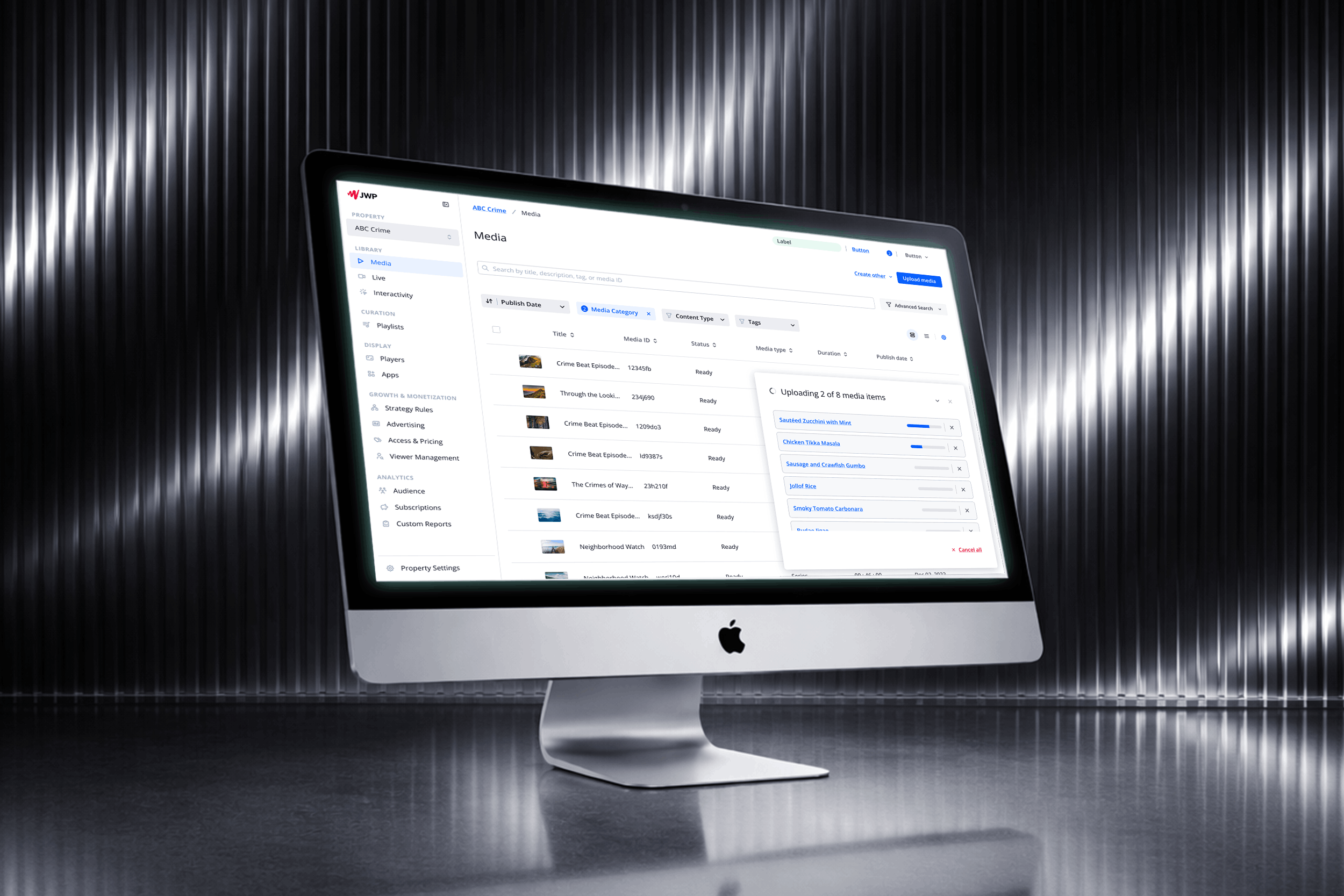
Media Uploader
Timeline: Q1–Q3 2024
Role: Lead Product Designer
While conducting usability audits of the JWP dashboard, I noticed a key problem. Uploading and preparing media files (the main thing our customers do) was really inefficient. Here, I diagnose the problems and create a simple, streamlined solution that drastically reduces time-to-value.
Problem space
Our largest customers would often have to upload 100+ media items in a single day. In order for media to display correctly for end users, metadata must be attached to each one. Editors had to:
Select files to upload
Wait. Sometimes for hours!
Search for each new media item in the library
Add tags and custom parameters
Repeat 99+ times
The system was cognitively heavy, operationally inefficient, and ate up a lot of a content editor’s day.
Technically, the process worked. It just didn’t scale!
Make It Better
To fix it, I anchored around three principles:
01
Reduce cognitive load at entry
02
Design for bulk behavior
03
Make the system status obvious
The Solution
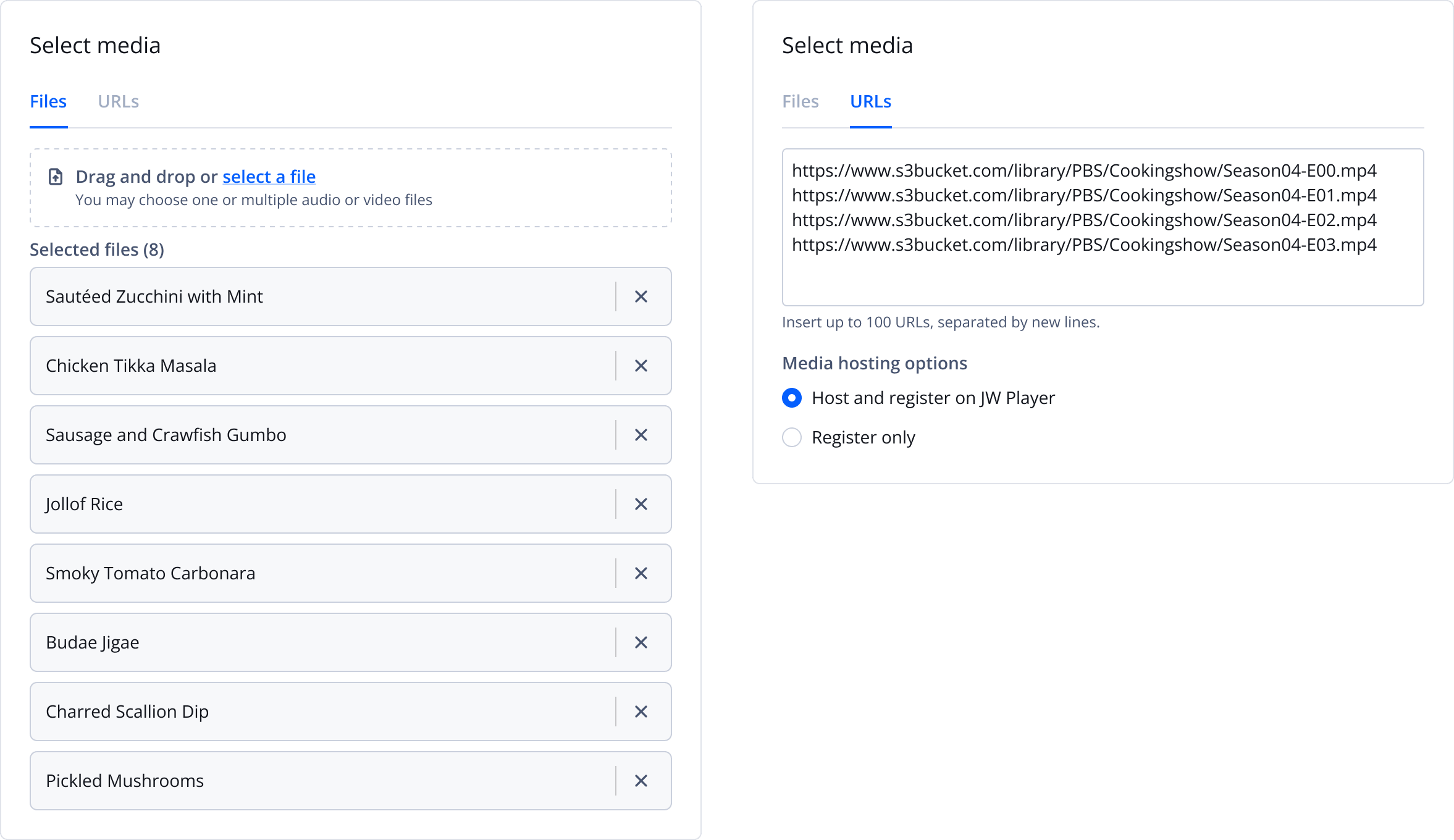
Remove the decision barrier
Previously, there was a hard barrier before entry to this flow where the user had to specify the type of media they intended to upload. This caused decision fatigue. I created a flexible, unified interface that allowed users to upload media files or URLs in a single session, eliminating unnecessary decisions upfront.
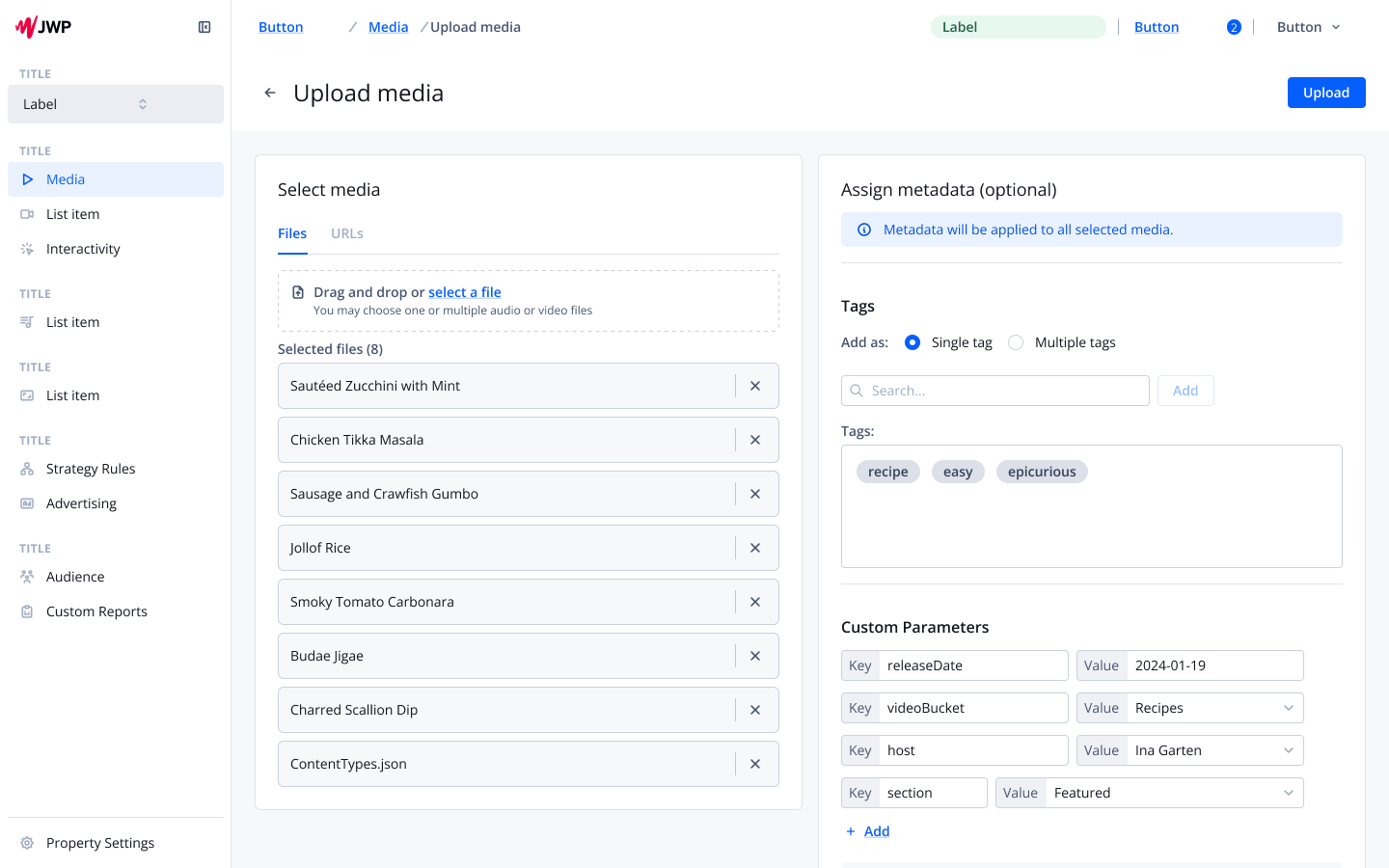
Move metadata upstream
Instead of forcing post-upload editing, I introduced a dynamic metadata panel inside the upload flow. This allowed users to configure metadata once, apply in bulk, and upload confidently. This reduced repetitive editing and prevented downstream errors.
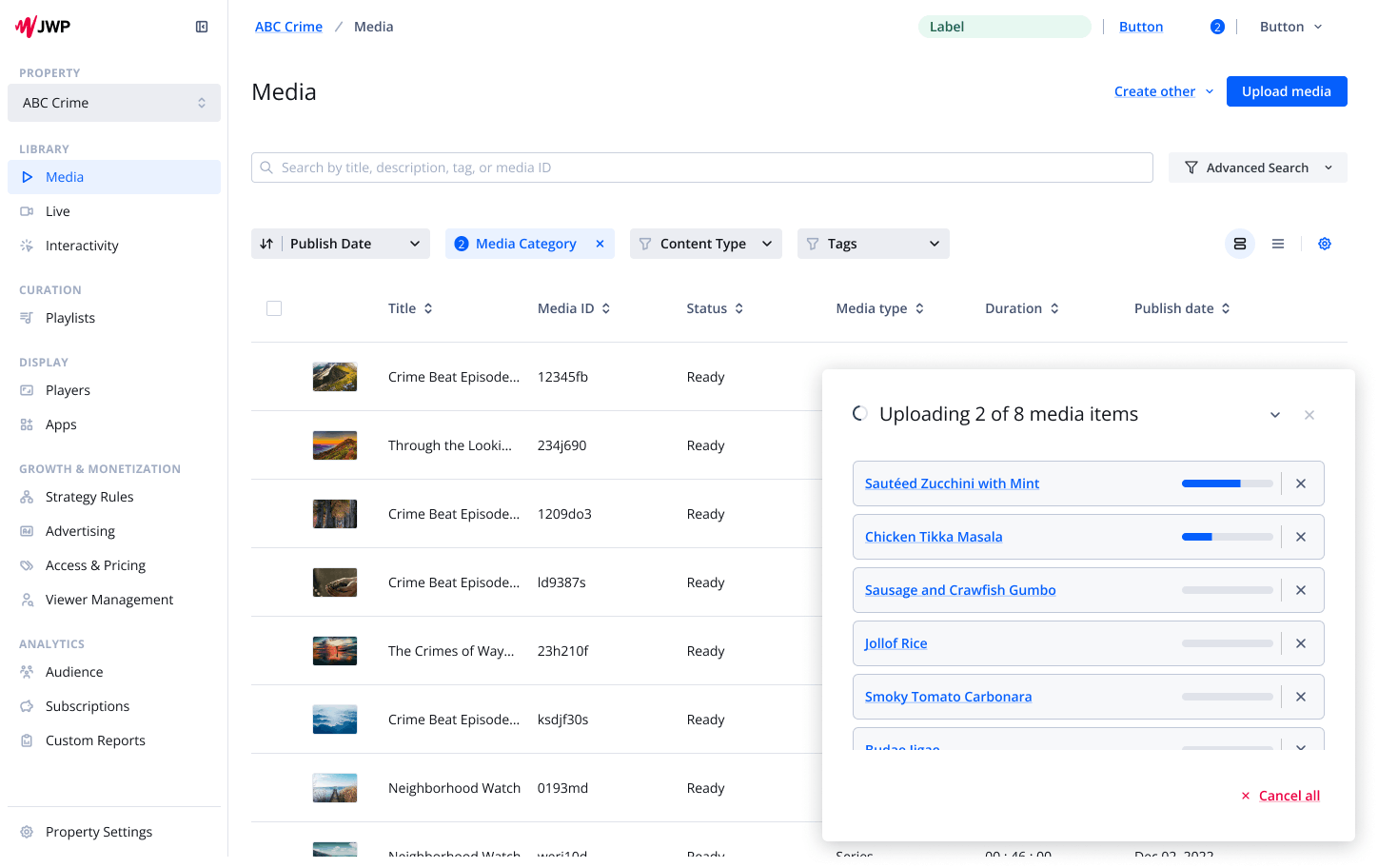
Eliminate fragility
The legacy system required users to remain on a static page or lose progress. I replaced this with a persistent, corner-anchored modal that showed aggregate per-file progress, afforded navigation to media items while they were still uploading, communicated the status of each upload, and minimized neatly when not actively in use. This transformed uploads from a blocking event to a background task.
This project had a huge effect on the most important process in our product:
Significant time savings for high-volume uploaders
Strong positive response from Enterprise customers
Drastically simplified metadata workflows
The Impact
Time to value was drastically reduced: content editors now spent 40% less time uploading and tagging their media. This was a huge quality of life improvement that (I like to imagine) made them fall in love with our product all over again.